
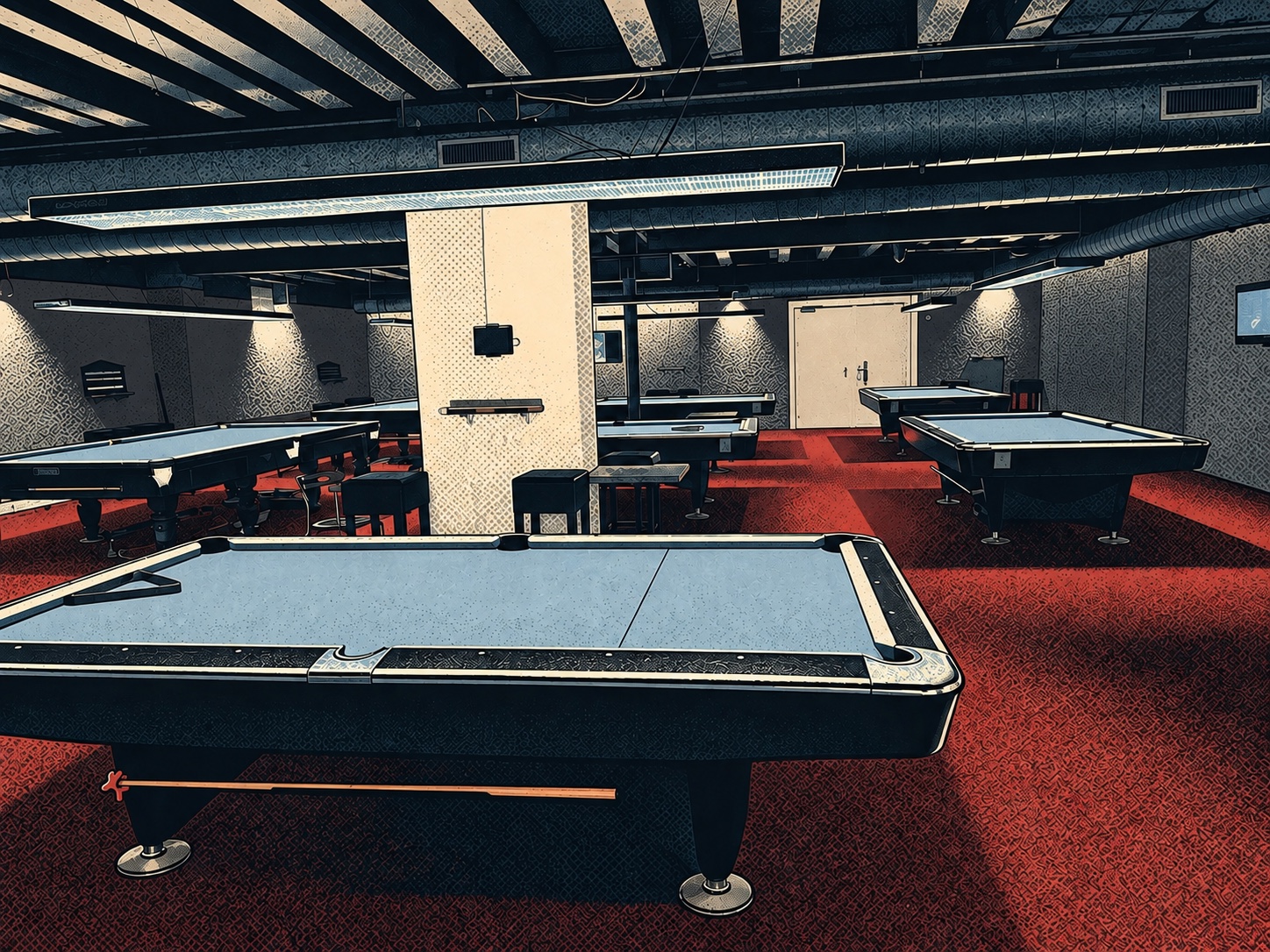
Pool combines technique, tactics and concentration. These explanations cover the common games in enough detail to get started at the table. For tournaments, the current WPA rules and event regulations take precedence.
How billiards became pool
Billiards grew from older European table games. In nineteenth-century North America, games with and without pockets developed into modern pool. The word “pool” originally referred to a shared stake. Disciplines such as 8-ball, 9-ball and straight pool developed over time. Today the World Pool Association governs international competition.
Equipment and basic play
The white cue ball is struck with the cue tip to send object balls into the six pockets. Only the tip may contact the cue ball. All balls must be still before a shot, and at least one foot must stay on the floor. Moving a ball with a hand, clothing or cue is a foul.
8-ball: rack and break
Fifteen object balls are racked in a triangle with the black 8 in the middle. One group is the solids, 1 to 7; the other is the stripes, 9 to 15. The cue ball starts behind the head string. The table remains open after the break: a later legal, called shot determines the groups. A ball pocketed on the break does not by itself assign a group. The WPA rules give the full break requirements and treatment of an 8 pocketed on the break.
8-ball: legal shots, fouls and winning
Once groups are assigned, the cue ball must contact your group first. Call the ball and pocket unless the shot is obvious. If nothing is pocketed, at least one ball must reach a cushion after legal contact. A foul normally gives the opponent cue ball in hand anywhere on the table. The 8 becomes your target only after your group is cleared. Pocket it legally in the called pocket to win. Pocketing it early, in the wrong pocket or with a foul loses the rack.
9-ball: lowest number first
Balls 1 to 9 are racked in a diamond. The cue ball must contact the lowest-numbered remaining ball first. A combination may then pocket another ball. Legally pocketing the 9 wins the rack; a foul gives the opponent ball in hand. After a legal break, a declared push-out suspends the usual first-contact and cushion requirements for one shot; the opponent then chooses who plays next. Competitions may add break requirements.
10-ball: call your shot
Balls 1 to 10 are used, and the lowest remaining number must be contacted first. After the break, call the ball and pocket; an accidentally pocketed ball normally does not continue your turn. The 10 wins only when it is the last object ball and enters the called pocket. If pocketed earlier, it is spotted. Push-out, fouls and ball in hand are also covered by the rules.
Straight pool: points rather than racks
In 14.1 continuous, each legally called and pocketed ball scores one point. Both ball and pocket are called. After fourteen balls are pocketed, they are racked again while the fifteenth remains on the table, often to open the next rack. Play continues to an agreed score. Cue-ball position and long runs matter greatly.
House rules and tournament rules
Casual games sometimes simplify the break or call-shot rules. Agree on the game and rules before the first shot. For official events and unusual situations such as frozen balls or consecutive fouls, consult the current WPA text.